Blog · 7 de octubre de 2026 · Detailing Academy
Ceramic Coating Application in the Florida Keys: What the Full Prep Process Involves
Por el equipo de Leoserve
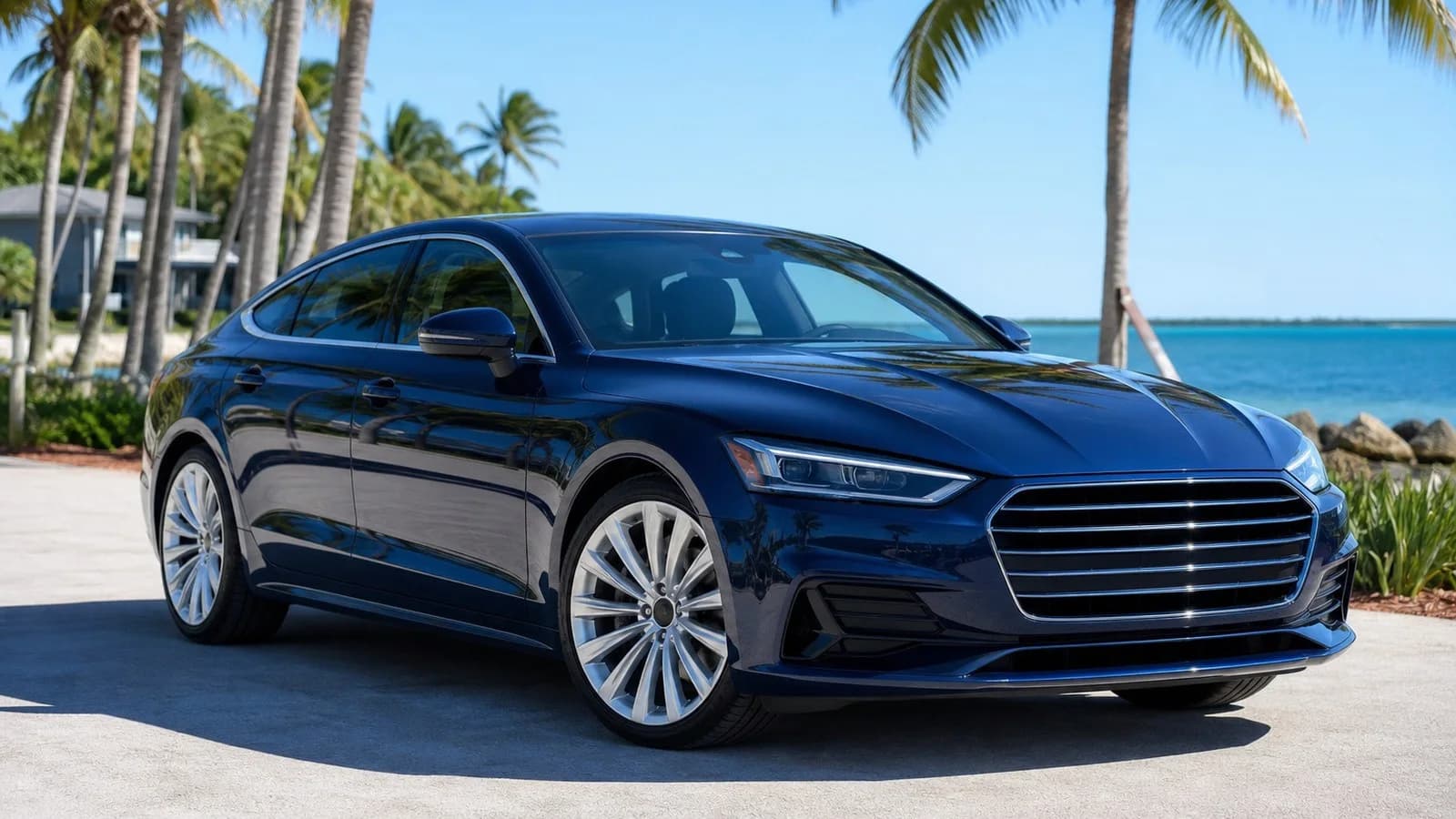
Ceramic coating is often described as a long-term paint protector — and in the Florida Keys, where salt air, UV, and humidity run at full strength year-round, the protection it offers is meaningful. But the coating itself is only as good as the surface it goes on. A ceramic coating applied over contamination, swirl marks, or residue locks in those defects and performs below its potential.
Leoserve is a Certified Liquid Armour Installer. This guide covers what happens during a ceramic coating appointment from start to finish, so you know what to expect and why each step in the prep sequence matters.
Quick Summary
- Ceramic coating is applied once as a long-term exterior treatment; the yearly visit is an inspection, not automatic reapplication.
- A Liquid Armour 9H coating carries a registered 5-year warranty when properly maintained.
- The full prep and application appointment runs 6 to 9 hours.
- Prep includes DI pre-rinse, foam-cannon soap, hand wash, DI final rinse, clay bar, polish, and alcohol prep — in that order.
- Ceramic coating protects the exterior only and does not replace interior detailing.
Why Prep Is Everything
A ceramic coating bonds chemically to the paint surface. It cannot selectively avoid scratches, bonded contamination, or swirl marks — it seals whatever is there. An improperly prepared surface is why coatings sometimes look worse than expected: the prep was skipped or incomplete, and the coating just made existing defects more visible.
The prep sequence Leoserve follows was designed for Florida Keys conditions: high heat, UV, and the salt deposits that accumulate even on cars parked away from the water. Each step serves a specific role in the sequence.
Step One: DI Pre-Rinse
Before any contact with the paint, a thorough deionized (DI) water pre-rinse flushes loose debris, salt residue, road film, and grit from the surface. Using DI water prevents mineral deposits that ordinary tap water leaves behind. This step protects the paint from abrasion during the foam and hand-wash phase that follows.
Step Two: Hand Wash and Final Rinse
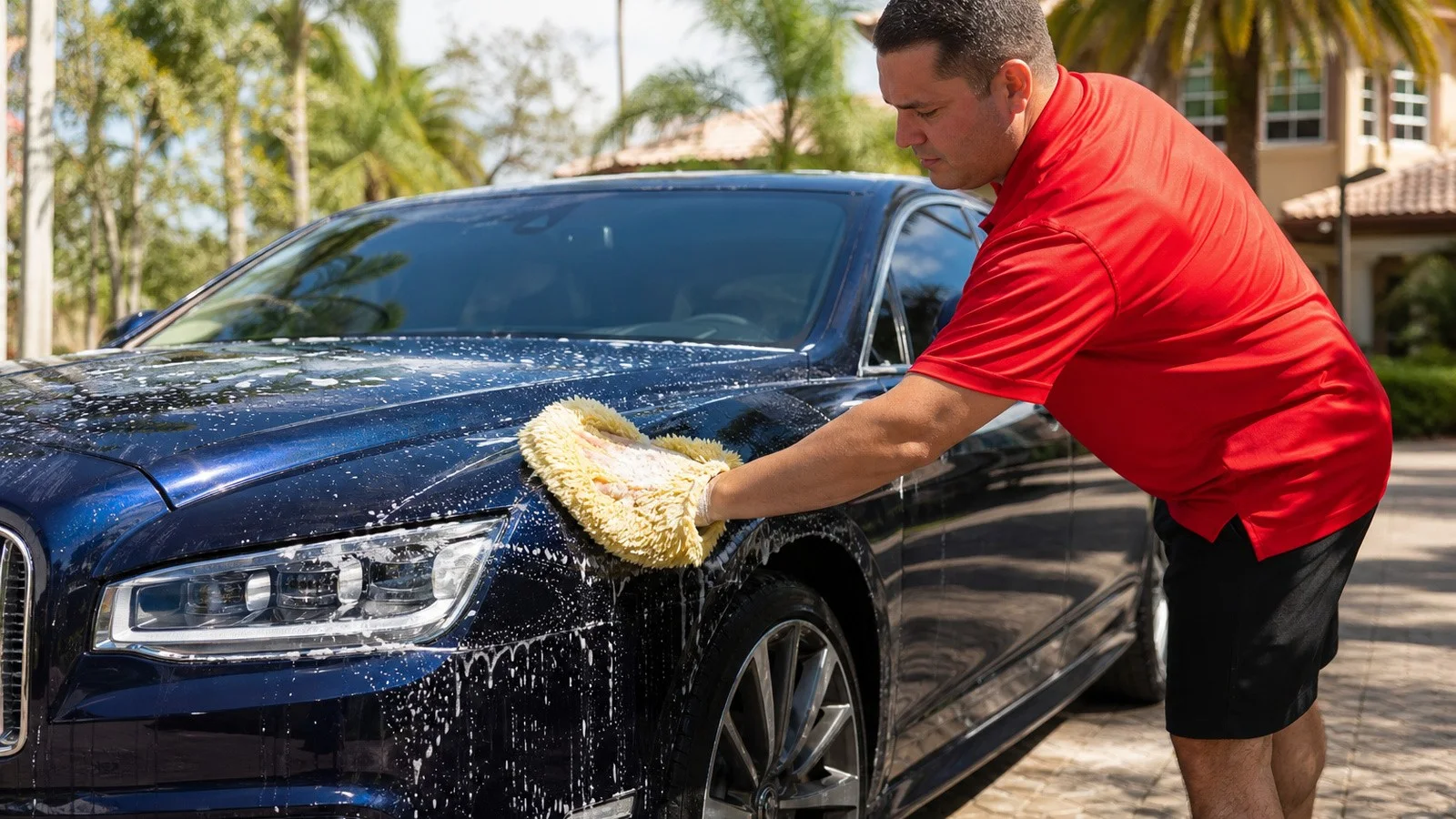
A foam cannon applies soap evenly across the surface. The team then hand-washes every inch of the car with a plush wool wash pad or car-safe washing sponge, working section by section to keep the contact media clean. Soft-bristle brushes are never used on car paint; wool pads and car-safe sponges are the only contact media Leoserve uses on painted surfaces.
After the hand wash, a DI final rinse removes all soap residue. The car is then allowed to dry completely before decontamination begins. Water remaining on the surface will interfere with the clay bar phase.
Step Three: Clay Bar
Clay bar decontamination removes bonded surface particles that the wash cannot reach: industrial fallout, rail dust, brake dust, embedded pollen, and fine contamination from the road. After a complete clay bar pass over the entire car, the paint surface should feel smooth to the touch — what detailers describe as glass-smooth. Any remaining rough texture means contamination that the clay should remove.
Step Four: Polish
Two to three stages of machine polish correct swirl marks, light scratches, and oxidation that a wash and clay bar cannot address. The number of stages depends on the paint thickness, the severity of the defects, and how much correction the clear coat can support.
Machine polish is assessed for every coating appointment; it is not automatic, but it is almost always required on cars that have been driven and washed over multiple seasons. This is the step where paint defects visible under the coating would have been removed. Any defect that remains after polishing will be sealed in permanently.
Step Five: Alcohol Prep
An isopropyl alcohol wipe removes any oil or residue left by the polishing stage. This step is required before the coating can bond properly. The paint surface must be completely bare — no oils, no polish residue, no contamination — for the ceramic coating to adhere at full strength.
The Coating Application
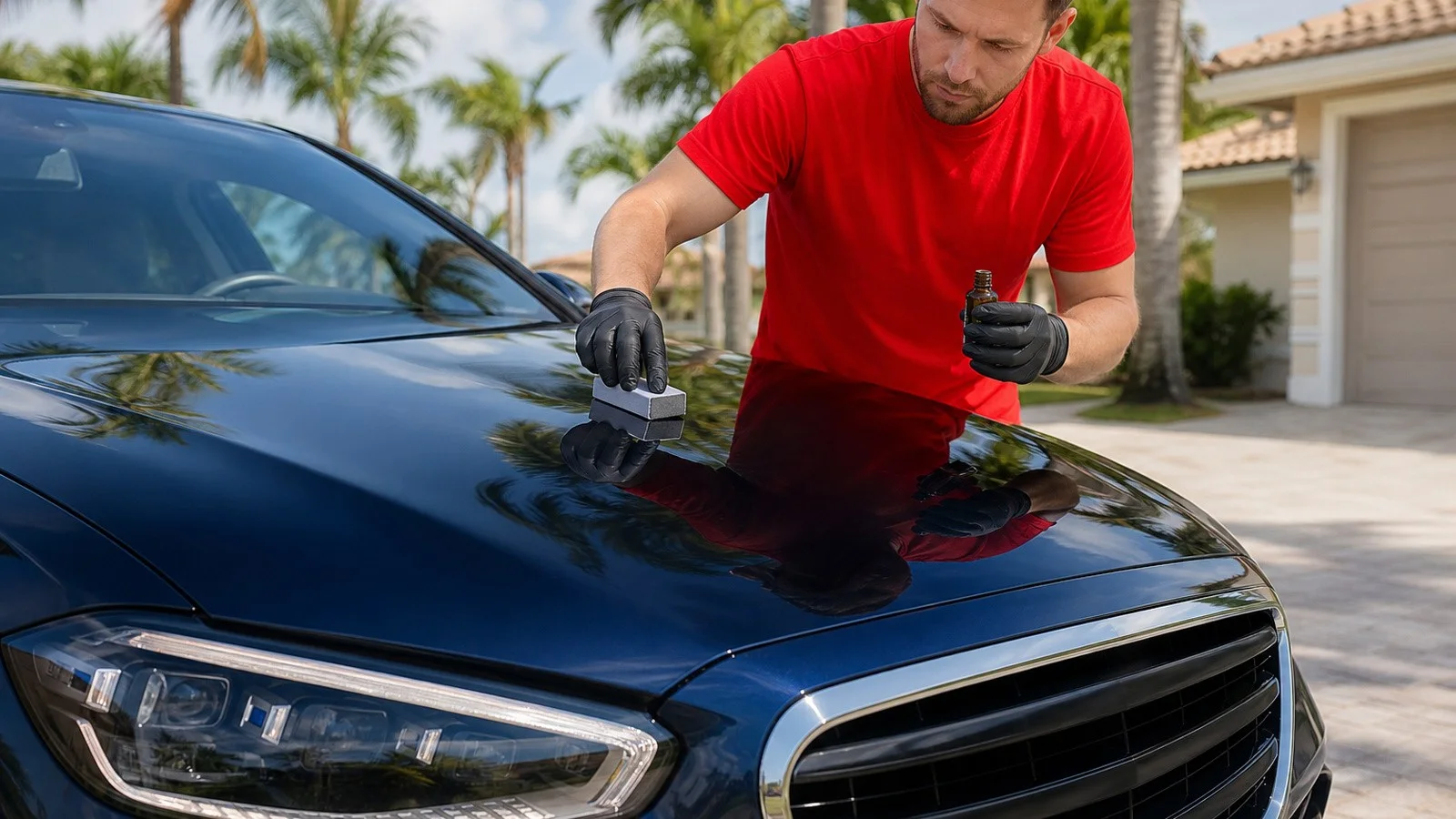
With the surface fully prepared, Leoserve applies Liquid Armour professional-grade 9H ceramic coating panel by panel using a foam applicator block. The coating is worked into the paint in overlapping passes and leveled before it begins to cure. In Florida's heat and direct sun, working quickly and methodically is important; applying over too large an area at once can lead to high spots or uneven bonding.
The full prep and application appointment runs 6 to 9 hours. That is the on-site time for the appointment — not the curing period. The coating continues to cure after the technician leaves, and Leoserve provides care instructions for the initial curing window.
After the Appointment
The coating is designed to last for years with proper care. Leoserve's annual visit is a coating inspection, not an automatic reapplication. Reapplication is not the expected pattern; a properly applied and maintained Liquid Armour 9H coating carries a registered 5-year warranty.
Regular washing is required after the coating is applied. The coating makes washing faster and more effective — water beads off instead of sitting — but it does not eliminate the need to maintain the surface. Leoserve recommends a bi-weekly or at minimum monthly maintenance wash to preserve the coating's hydrophobic performance and extend its life.
Ceramic Coating Does Not Replace Interior Detailing
Ceramic coating is an exterior treatment only. It has no effect on the interior of your car. Interior detailing — seats, floors, dashboard, and door panels — should continue on its own schedule. For Florida Keys cars in regular use, Leoserve recommends a full interior detail every two to three months. The exterior coating and interior detailing serve different purposes and are not interchangeable.
Book a Ceramic Coating Appointment
If you are ready to discuss ceramic coating for your car, reach out to Leoserve. Learn more about the service at https://leoservecleaning.com/ceramic-coating/ or book directly at https://leoservecleaning.com/about/contacts/.
Frequently Asked Questions
How long does a ceramic coating appointment take?
A full prep and application appointment runs 6 to 9 hours. That is the on-site time, not the curing time.
Does ceramic coating need to be reapplied every year?
No. The yearly visit is a coating inspection. Reapplication is not the expected annual pattern; a properly applied Liquid Armour 9H coating with regular maintenance carries a 5-year registered warranty.
Can ceramic coating be applied over swirl marks or scratches?
It can, but it should not be. The coating bonds to the surface as-is. Any defects remaining after the prep and polish phase are sealed in permanently. Polishing is part of Leoserve's standard prep for this reason.
Does ceramic coating replace interior detailing?
No. Ceramic coating is an exterior treatment only and has no effect on the car's interior. Interior detailing should continue on its own schedule.